“Superman” antibodies, “cocktail” approaches and the BRILLIANT Consortium: An interview with Dr Nigel Garrett on his journey into HIV research
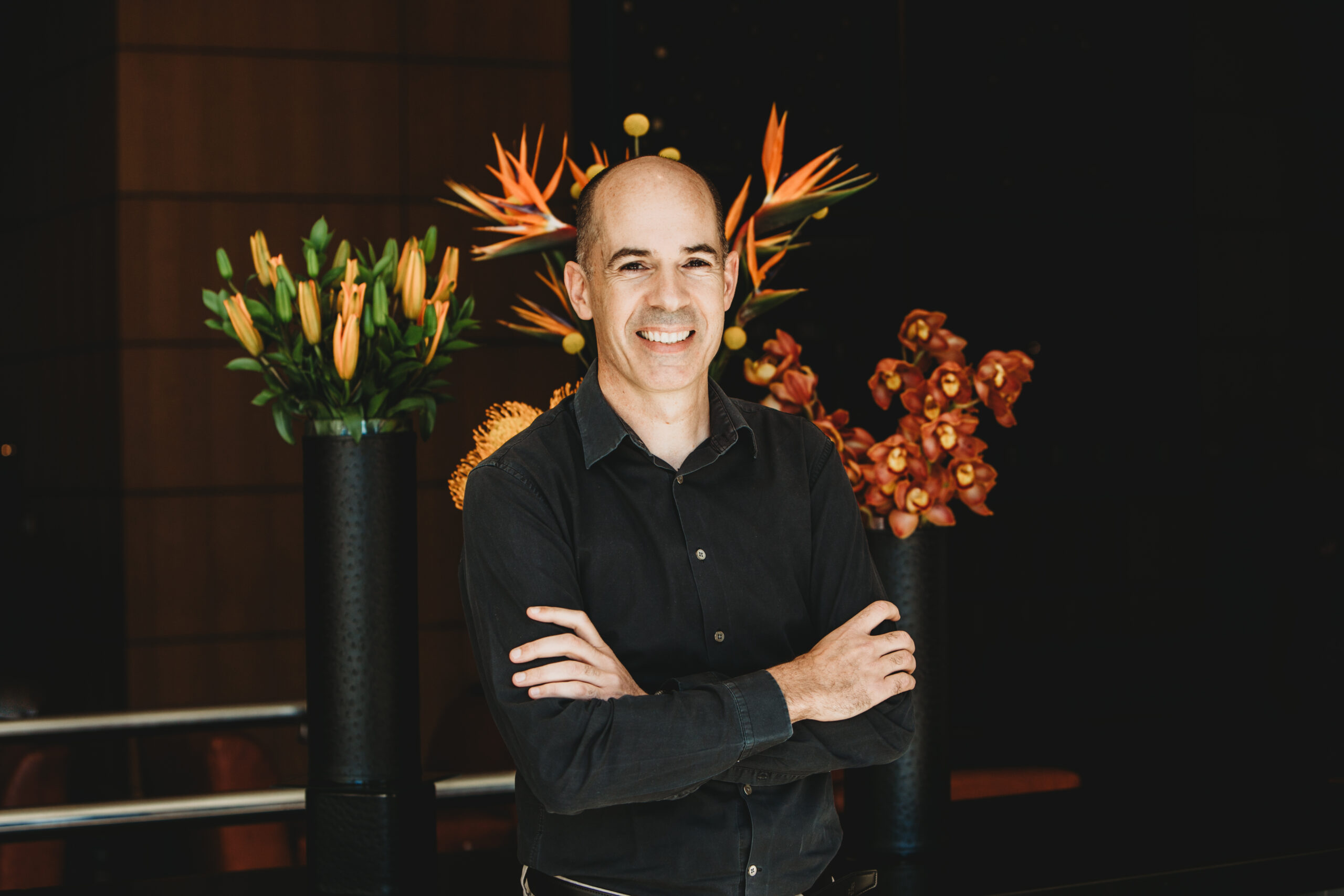
Dr Nigel Garrett is a Specialist Physician in HIV and Sexual Health. He is the Head of the HIV Pathogenesis and Vaccine Research programme at CAPRISA (Centre for the AIDS Programme of Research in South Africa). Dr Garrett has served in both Principal and Co-Investigator roles on more than 20 randomised clinical trials and large cohort studies related to HIV prevention and COVID-19 vaccines. He has published more than 100 manuscripts on topics including vaccines, HIV prevention and sexual health. Dr Garrett is the CAPRISA Investigator of Record for the HIV Vaccine Trials Network (HVTN) studies, and acts as international Co-chair on the COVPN 3008 Ubuntu mRNA vaccine trial. He was Co-PI on the Sisonke J&J COVID-19 vaccine study, PI on several NIH self-initiated grants and is currently the Deputy Programme Director of Science, Lead PI, and Programme Co-Lead of the Clinical Programme for the BRILLIANT Consortium.
You trained as a clinician in the UK. What led to you coming to South Africa, and particularly KwaZulu-Natal?
I actually grew up in Berlin. I’ve got a German mother and an English father, so I went to school in Germany, but then studied in the UK. I did all my training in London and Brighton. I then decided to specialise in internal medicine and did what they call the Royal College of Physicians membership exams. You are then meant to specialise further, but I decided to take a year out and worked as an emergency doctor for Doctors without Borders (MSF) in Burundi. This was kind of an odd thing to do. As a clinician or medical student, you always get told that you need to focus on your career, you need to specialise. I think I was quite unusual to go out at that stage, but I learned a lot. I was stationed in Burundi, where they had a similar situation with the genocide as Rwanda. It was post-genocide, a chronic emergency with some remaining rebel groups. Initially, I could not do a lot of work because government forces were chasing rebels across our access routes to the hospitals-we were stuck. It makes you think a lot about public health and what impact you can make. In the end, I settled in a rural hospital that was originally run by nuns and had been taken over by MSF. There were 14 clinics in the surrounding hills that we served. I convinced the head of the MSF mission to place me right next to the hospital, where I found shelter with a local priest for 3 months, allowing me suddenly 24-hour access to hospital patients. In these contexts, you come up with solutions which are kind of brilliant because it’s not really what you usually do or learn in medicine. I learned a lot about managing projects successfully. If your project doesn’t succeed, then you don’t really succeed as an individual. I think that’s where I gained many skills that we later used in the Sisonke COVID vaccine trial*.
After returning to London, I developed a passion for public health and infectious diseases. I worked a year at the Tropical Disease Hospital, and further specialised in HIV and sexual health. Then I did a Master’s in epidemiology at the London School of Hygiene and Tropical Medicine. I completed my specialist training and again thought, “What should I do?” A friend and colleague of mine had just started a job at the Africa Centre for Population Health in KwaZulu-Natal. He just said, “Listen, I’m here in KZN, why don’t you google ‘AIDS jobs in Africa’?” Very stereotypical! But I did it and the CAPRISA (Centre for the AIDS Programme of Research in South Africa) job came up. It was originally advertised as an HIV virology job. Initially, I thought that it didn’t quite fit, but I was at the Vienna AIDS conference when Profs Salim and Quarraisha Abdool Karim presented the CAPRISA 004 Tenofovir Gel Study in 2010, which created a lot of excitement and a standing ovation. So, I knew the directors of CAPIRSA, and I thought the way they presented bridged a lot of my interests in basic science, clinical medicine and epidemiology.
There was then the job interview, and initially I didn’t take it too seriously. But the interview panel included great scientists including Profs Salim & Quarraisha Abdool Karim, Lynn Morris, Ayesha Kharsany, Caroline Williamson and Clive Gray. The CAPRISA team made such an effort, that I thought about it for a while and realised that this was a great opportunity to work in the heart of the HIV epidemic in KZN with great scientists. I’ve been working for 12 years now as the Head of Vaccine and Pathogenesis Research at CAPRISA. What I have enjoyed most working here is the ability to do translational research. You have a laboratory, you have a clinic, you have public health data (implementation data from clinics and so on) and the Department of Health where you can ask how does it all fit together, how can we improve things, what are the interventions we need to design and we then actually come up with new products or vaccines that can make a difference.
You wear many hats, from being the Head of the HIV Vaccine and Pathogenesis Research programme at CAPRISA to playing a leading role during the Covid-19 pandemic as the co-chair of the Sisonke Covid-19 vaccine implementation study, and much more. Could you speak to your various roles?
This is what happens when you are in settings with many challenges, let’s say, public health challenges. You do one thing well and then you get involved in something else and you keep going with both. And then you do the third thing. Currently, I’m still the Head of Vaccine and Pathogenesis Research. We were running several HIV vaccine trials and were one of the largest clinical trial sites in South Africa. The pivotal study was the Imbokodo study that we conducted with Johnson & Johnson for HIV vaccines. Then the COVID pandemic hit us. We had a critical meeting at CAPRISA right at the beginning of the pandemic, brought everyone in one room and said, “Are we going to do this? Are we going to join in or are we not going to join in the COVID response?” But I think the decision was already made. The director of CAPRISA was prominent in the initial phase at the political level in advising the South African President, being the Chair of the MAC (Ministerial Advisory Committee). The vaccine teams engaged with J&J and quickly pivoted to running the Ensemble COVID-19 vaccine trial. That led to the Sisonke vaccine rollout. Essentially, we didn’t have a choice. We had to take on the responsibility. So, my second hat is that COVID trial hat.
I am also the eThekwini Clinical Research Site Leader in the US National Institute of Health Networks. This is CAPRISA’s flagship research site where we run about 20 trials currently. You conduct network studies and then you have your own studies that you design. At CAPRISA, we aim to be 50% collaborative and 50% do our own work, which is a little bit unique across Africa. You get approached a lot by external collaborators, but it’s nice to create your own research agendas because then you own the research more. For the CAPRISA studies, we currently focus our research on broadly neutralising antibodies (bNAbs). All that needs overseeing. We have about 100 staff at this site. So that is the other hat.
You are the Deputy Program Director of Science, Lead PI, and Program Co-Lead of the Clinical Program for the BRILLIANT Consortium. Could you elaborate on your role in BRILLIANT and the importance of the BRILLIANT consortium both for Sub-Saharan Africa and the world?
The BRILLIANT Consortium is a relatively new consortium. A lot of the senior people in the network come from the COVID response. We have that same energy and drive that we really want to translate into HIV vaccines now. Some of the technology that was used in COVID was actually developed through HIV research. I think HIV deserves to have this attention now and learn from COVID, to close that loop. We feel that we’ve got this huge opportunity now as a team to implement our ideas on the African continent.
A lot of the senior people in the network come from the COVID response. We have that same energy and drive that we really want to translate into HIV vaccines now. Some of the technology that was used in COVID was actually developed through HIV research. I think HIV deserves to have this attention now and learn from COVID, to close that loop. We feel that we’ve got this huge opportunity now as a team to implement our ideas on the African continent.
My role is the Deputy Director of Science, and I am supporting Profs Glenda Gray, Linda-Gail Bekker, Betty Mwesigwa and Cissy Mutuluuza. They are the Principal Investigators, the women-led team. I am interested in the HIV vaccine science and helping with running the clinical trials. My main role at the moment-because we have an ambitious target of running a clinical trial every year for five years-is to implement the first trial. The BRILLIANT-001 trial exists because we designed it and we wrote the study protocol. We’re working with immunogens that originated from African participants and patients but have been further developed and produced by US and European collaborators. We are going to use these vaccine concepts and test all our systems in Africa. Our trial will enroll participants into 4 groups who will receive different ‘prime – boost’ combinations of immunogens. One uniqueness of the trial is to administer two immunogens at once to prime the immune system, and then also boost with two immunogens to trigger a stronger immune system response. Few trials have really studied what we call a “cocktail approach.” That’s going to be quite exciting.
To give you some background to this, I think the HIV field has made huge progress over the past decades particularly with the successful treatment rollout. We also just had the big announcement by Prof Linda-Gail Bekker on the Purpose 1 Trial, which tested a long-acting anti-HIV drug called lenacapavir and showed 100% effectiveness in preventing HIV in the women who were given the drug. I was on stage with her at the AIDS2024 conference in Munich, when she received a standing ovation in front of four thousand people. This is obviously very exciting. A second trial, called Purpose 2, has since confirmed the high effectiveness of this drug. This is super promising and means that everyone’s focus needs to shift to starting the lenacapavir rollout as soon as possible.
At the same time, HIV incidence (the number of new cases) is coming down slowly now. It’s going to get increasingly difficult to run HIV vaccine efficiency trials – the large studies where we look at HIV infection as an endpoint. If the disease or infections are less prominent, then you need a so-called ‘correlate of the disease’, a marker that tells you that you may be at high risk of getting the disease, and a ‘correlate of protection’ (what would protect you) so that you can measure the protective marker rather than the disease itself. Currently, we think that the correlate of protection for HIV may be broadly neutralising antibodies. Previous vaccines have focused on eliciting strong T-cell and antibody responses, but not necessarily triggering the development of broadly neutralising antibodies. That is the big challenge currently: how can we elicit broadly neutralising antibodies. My colleague Prof Penny Moore calls them “superman” antibodies. They can neutralise a diverse spectrum of HIV viruses and have high potency against each of them.
When I arrived at CAPRISA, my first task was to supervise the CAPRISA 002 acute HIV infection study. This study included women who participated in HIV prevention studies, but acquired HIV. We followed these women over time and managed to show how some of them developed broadly neutralising antibodies. It’s a bit like an arms race between the antibodies and the virus. HIV evolves and mutates very quickly, which is one of the main reasons why we are struggling to find a vaccine. The antibody changes and gets better, but usually the antibody is a little bit behind. Although over 2-3 years the antibody becomes very broad and potent (“super antibodies”) in about 20% of people, they still don’t neutralise all the viruses because the virus has further evolved. The idea is that the vaccine will be able to elicit these bNAbs before someone acquires HIV.
The concept was tested in the AMP study (Antibody Mediated Prevention) – an efficacy trial where we gave people without HIV regular infusions of antibodies, a strategy called “passive immunisation.” It showed that the single antibody neutralised some of the viruses that were “sensitive” to the antibody. However, when the virus was what we call “resistant” to the antibody, these antibodies would not protect. Although the study didn’t show a big difference overall, if you looked at the sensitive virus population, it was effective. That provided a proof of concept, but also showed that we may need multiple bNAbs for protection from HIV, a bit like using multiple antiretroviral medications for HIV treatment. That’s why the HVTN is now designing studies with 3 antibodies for prevention. That’s a lot of work. It’s difficult to make these antibodies, and its costly, but it is also crucial work for HIV vaccine discovery.
BNAbs are currently our best correlate of protection and with the new vaccine programme, we’re trying to elicit bNAbs. It’s a huge challenge. There are words like “germline targeting,” “shepherding” and “polishing.” We are trying to almost guide the body to make the right antibodies by giving different vaccine products, also called immunogens, in a sequence. This concept is called “sequential vaccination.” We give multiple immunogens, so they are almost mimicking what the virus and B cells (antibodies are made by B-cells) do in a person with HIV. We give slightly different immunogens to hopefully elicit these bNAbs in a person without HIV. That’s where the BRILLIANT Consortium fits in. We design germline-targeting studies that hopefully trigger the right B-cells in a person, that can then start making the right antibodies and then we can measure this in the body. This is what we call discovery medicine studies.
That’s where the BRILLIANT Consortium fits in. We design germline-targeting studies that hopefully trigger the right B-cells in a person, that can then start making the right antibodies and then we can measure this in the body. This is what we call discovery medicine studies.
South Africa faces many public health challenges, but we are also at the forefront of promising research. How do you see your work contributing to broader public health goals in South Africa and beyond?
I think we’re good at conducting clinical research in South Africa. We’re as good as, let’s say, the Americans. We’re pretty good at public health, to the extent that some South African organisations assist with public health responses in the U.S or Dubai or China. We know how to do good implementation work and public health. However, we are lacking on the vaccine development and manufacturing processes. This was highlighted in a recent report that I contributed to, by the Partnership for African Vaccine Manufacturing led by the African Union. During the COVID pandemic, we realised that nobody was able to make vaccines on the African continent. This resulted in serious delays in providing access to lifesaving vaccines for the population. We have to ensure that we create vaccine hubs, places where you already have some infrastructure so that you can implement and support a more integrated and proper vaccine manufacturing pipeline. Less than 1% of vaccines used in Africa are produced in Africa. That is where the problem lies. It requires a consorted effort to really produce products at the end of the day. I think that is where the excitement is with BRILLIANT. Can we help in that space and create a manufacturing pipeline with immunogens that are developed in Africa and take them through that entire pipeline up to clinical development, production and maybe even a product? This would have a benefit beyond just HIV.
In reflecting on your career, is there anything that you are especially proud of?
When I reflect on my career, I generally make career decisions with my brain for 2-3 years and then do something that my heart tells me to do. You need periods where you work really hard and just stick with something so that you get the skills. But then you’ve got to give yourself space to let your heart and your passion decide what you want to do. I think that’s what I’m proud of – for example, the decision to join MSF at a critical point in my medical career. Although it didn’t quite make sense career-wise at the time, it taught me so many great things about project management, understanding people, looking beyond yourself in your career. The decision to leave the UK and move to South Africa was another decision that I made with my heart. It may not be what everyone would have done, but these decisions make you someone unique.
In terms of specifics, I think, our contribution to the COVID vaccine response in the Sisonke study stands out. Our data estimated that we saved at least 300 healthcare worker lives and prevented more than 1000 hospital admissions in the first 3 months of the rollout of the Sisonke study. That’s a proud achievement and a huge success for the entire team.
I’m also happy I contributed to the new strategic plan for HIV, Tuberculosis and STIs. As scientific writer for the STI working group, I managed to contribute several ideas that I developed in my PhD, including better diagnostic testing for STIs. We also proposed specific priorities and targets that provide guidance to the Department of Health and other stakeholders. I hope to support this effort going forward. Reports and guidance documents are often externally funded and can become a tick-box exercise, but if we take the process seriously, it can become a huge opportunity. For HIV, TB and STI care, South Africans have lots of experience now and we need simple solutions that are cost-effective. We know what’s needed and what’s not needed. If external people do this work, it’s not going to be as impactful.
On the HIV vaccine side, I’m just happy that we decided to keep going with this programme, because it’s still one of the biggest unresolved problems in infectious diseases. Globally, many people continue to die of HIV. Particularly, young women continue to acquire HIV every year. Babies are still getting infected. We need to continue with this work, and focus on reducing the disease burden of HIV, TB, and STIs. Vaccines will play a major role in this, and we will help to assess them. Sometimes in life and in research it is good to stick to what you’re good at.
What advice would you give young researchers?
Work hard. Be honest and transparent. Aim for perfection but be happy with 90%. Which is so tricky, especially in public health. People say epidemiologists need “clear minds but dirty hands.” You got to get out there and do work, and it’s not all going to be perfect. Accept imperfection. I often joke with friends and colleagues that I have already won two Nobel prizes, one as citizen of the European Union and one with MSF. Developing an effective HIV vaccine could be another Nobel prize because it’s the perfect prevention tool. Continuing to follow our dreams and passion will hopefully get us there.
Commit to projects and collaborations. Once you decide to be part of a project, there will always be difficult patches where you don’t always get on. Sticking to it once you’re committed is a really strong message for your collaborators and it builds a lot of trust when you go through thick and thin together.
A lot of young people wonder, “What do I want to study?” I struggled with that myself. Now, I realise that sometimes it’s best to pick one subject or degree and go with it. What I’ve realised is that you may land up in a similar position in the end, whatever path you take, because the many decisions you take on your path are still you. In medicine, you can become a cardiac surgeon or specialise in public health and become a politician if you want. If you’re a journalist, you can become a medical journalist and then get involved in public health and be equally effective. Sometimes we look for this perfect degree or the perfect job that doesn’t exist. It’s more about what you create eventually.
Lastly, can I say a few words about BioInformatiCo? It’s great that we have companies like this on the African continent. The data management space is crucial to good clinical trial design and conduct. My experience with the BioInformatiCo team was when we conducted the CoVPN3008 study together. This study was conducted across 7 African countries studying the safety and effectiveness of mRNA COVID vaccines, particularly among people living with HIV. The study was not just about science and saving lives but also about human rights, because there hadn’t been enough access to mRNA vaccines in Africa. I think, it was great the way BioInformatiCo joined this study and successfully managed the complex data systems. The speed at which you did that was fantastic. We are looking forward to working with your company on BRILLIANT and future projects.
* Sisonke 1 was a 500,000-person study evaluating the safety and effectiveness of the Ad26 COVID-19 Vaccine.
Read our related articles:
“This is not the time to be fatigued or to turn away”: Interview with Professor Linda-Gail Bekker
Interview with Professor Glenda Gray on the BRILLIANT Consortium
Towards an HIV-Free Future: BioInformatiCo Partners with the BRILLIANT Consortium