


Clinical research trials play a significant role in the advancement of modern medicine. In asking some simple yet fundamental questions such as, ‘Does this new treatment work?’, ‘How does it work in comparison to existing treatments?’ and ‘How severe are its side effects?’, clinical research trials aim to close the gaps in current medical knowledge and widely adopted principles.
Often overlooked, is the positive, knock-on effect of conducting clinical research trials in underdeveloped regions burdened by higher rates of disease. This was the focus of the South African Clinical Research Association (SACRA) Conference in 2023. With the motto ‘Converge for Africa’, the conference aimed to underscore the need for both local and foreign investment in the field of medical research throughout Africa.
In her keynote address, physician, scientist, activist and president of the South African Medical Research Council (SAMRC) Professor Glenda Gray, highlighted the disconcerting gap between South Africa’s high disease burden and the low number of locally hosted clinical trials, which account for a mere 10% of the global total. While Professor Gray, Margaret Williams from Margan Clinical Research Organization (MMARCRO), and other speakers stressed the need to host trials locally, they also mentioned the attached benefits for foreign investors:
- As the country facing the largest HIV epidemic, conducting HIV-related clinical research in South Africa would surely support the realisation of the 2030 HIV control goals set out by UNAIDS (The Joint United Nations Programme on HIV and AIDS).
- It is well known that South Africa has a high incidence of non-communicable diseases, where 4.2 million South Africans were living with diabetes alone in 2021, according to a statistic cited by the United Nations Children’s Fund (UNICEF). This presents an opportunity for rigorous research, as diversity of disease areas exists in a large portion of the population.
- Due to the comparatively low cost of business, South Africa is an affordable and attractive host location, especially as the race toward new drug development intensifies.
- South Africa, commonly known as the ‘Rainbow Nation’ and regarded as the Cradle of Humankind, possesses a broad genomic diversity. This diversity can facilitate the improvement of participant recruitment for diverse studies, in line with the recent guidance from the Food and Drug Administration (FDA) on the inclusion of underrepresented racial and ethnic groups in research.
These are just a few of the learnings at SACRA and only a few of the motivations we can use to advocate for conducting more clinical research on our continent.
Often overlooked, is the positive, knock-on effect of conducting clinical research trials in underdeveloped regions burdened by higher rates of disease.
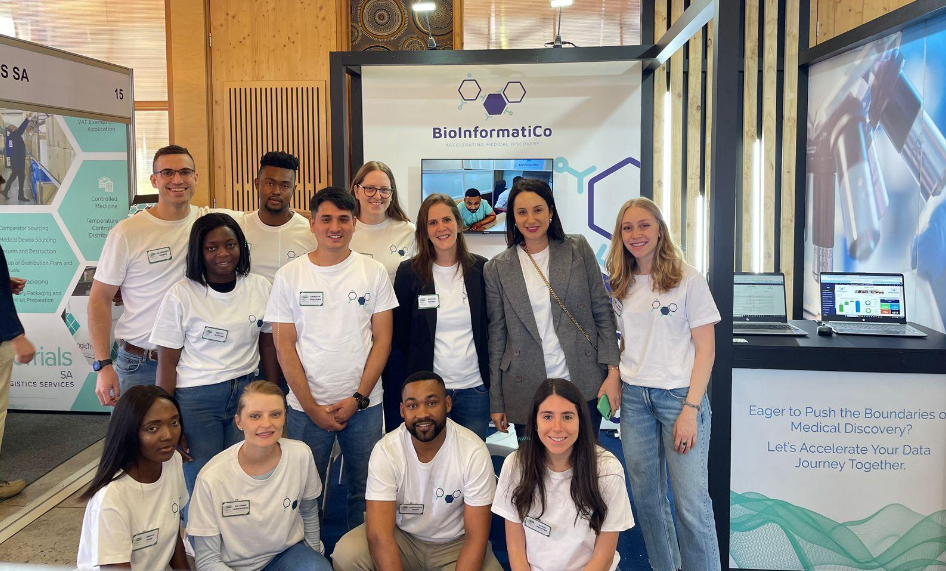
As we walked away from these sessions with a weighty sense of responsibility, our BioInformatiCo team also walked away with an awakened sense of purpose and drive. We contemplated our role in providing reliable, robust data management systems to the clinical research space. The more we engaged with other SACRA conference attendees in the coffee breaks between sessions, the more insight we gained.
Overall, our insights were two-fold:
- It takes a village of dedicated service delivery teams to conduct medical research that contributes to advancing modern medicine.
- The overwhelming sense of passion for clinical research was palpable amongst SACRA attendees.
We at BioInformatiCo share this passion, which will propel us forward in our collective journey towards Accelerating Medical Discovery.
View the conference details here:
https://www.sacraza.com/event-details/sacra-conference-converge-for-africa
References
- South African HIV Statistics https://www.ncbi.nlm.nih.gov/pmc/articles/PMC9265818/
- UNICEF Statistic on Diabetes in South Africa https://www.unicef.org/southafrica/my-body-my-health-my-wealth
- FDA Guidelines https://www.fda.gov/regulatory-information/search-fda-guidance-documents/diversity-plans-improve-enrollment-participants-underrepresented-racial-and-ethnic-populations